
The Bone Formula
Learn the Bone Formula by applying the four exercise principles needed to maximize the bone-building potential of exercise
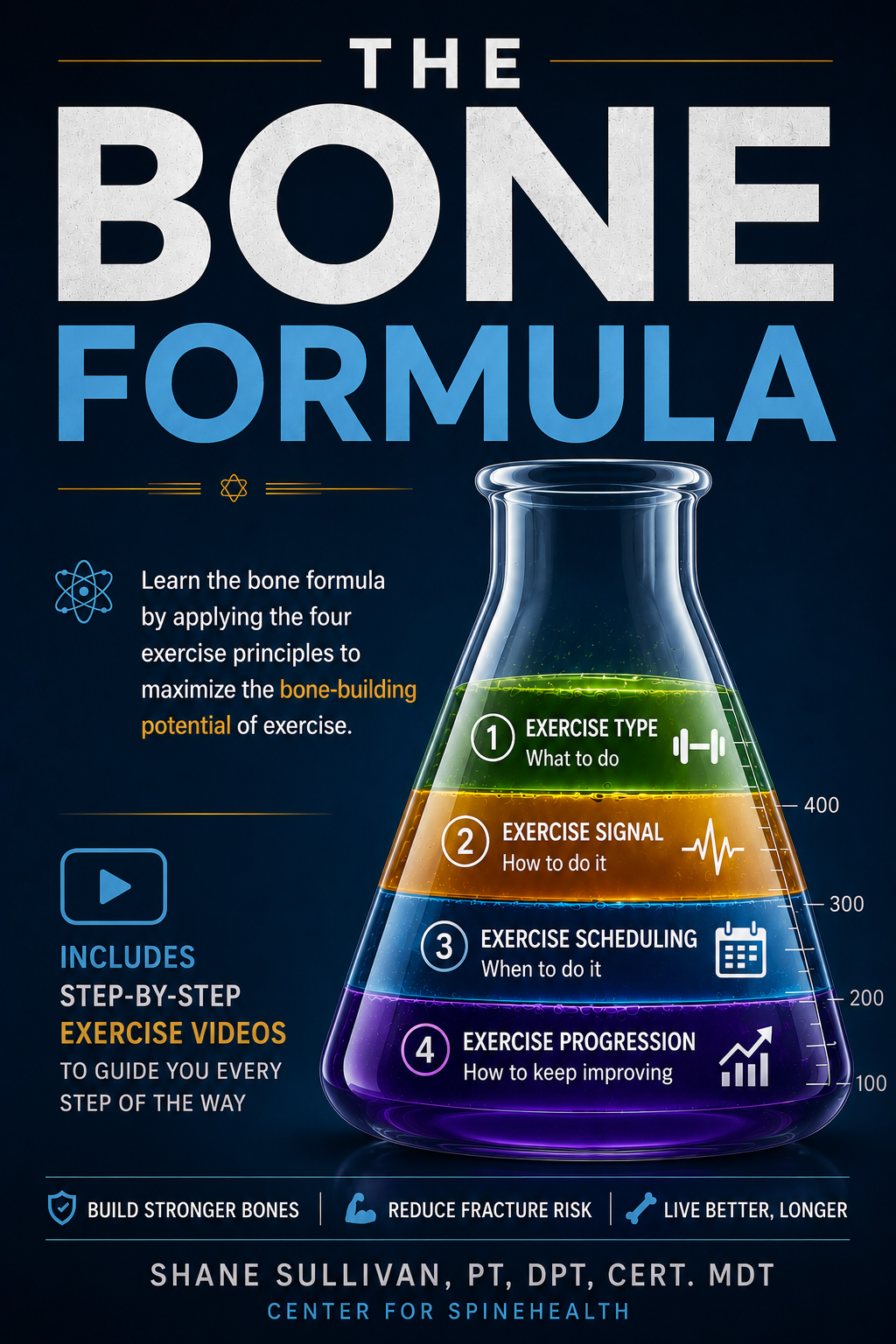
Exercise Type
Learn exercises that target areas of the skeleton most vulnerable to fragility fractures: The hip and spine.
What You Will Learn After Reading Book
Exercise Signal
Learn how to perform the exercises to ensure they are providing a stimulus or “exercise signal” strong enough to be detected by the bone.
Exercise Scheduling
Learn when to perform the exercises, so the bones are in a receptive state to respond to the exercise stimulus or “exercise signal”.
Exercise Progression
Learn how to progressively overload the exercises, to give the bones a reason to maintain their strength over time.
Evidence-Based Guidance You Can Trust
Medical Professional
“The Bone Formula does an excellent job of translating the science of exercise and osteoporosis into information patients can understand and put into practice. It provides a thoughtful, evidence-based framework for understanding how exercise can support bone health.”
Drake Wakefield, MD
Pain Management Physician
Medical Professional
“What sets The Bone Formula apart is that it goes beyond simply telling people with osteoporosis to exercise. It explains the type, intensity, timing, and progression of exercise in a practical way that helps readers understand not only what to do, but why they are doing it.”
Tracie Harris, NP
Nurse Practitioner
Medical Professional
“The Bone Formula fills an important gap in osteoporosis education. The information is comprehensive without being overwhelming, and complex concepts are presented in a way that patients can understand. It is a valuable resource for anyone who wants to take a more active role in protecting their bone health.”
Andrea Ferenci, MD
Endocrinologist
Medical Professional
“One of the challenges after an osteoporosis diagnosis is helping patients understand how to remain active without becoming fearful of movement. The Bone Formula provides practical education that can help readers better understand appropriate exercise and approach physical activity with greater knowledge and confidence.”
Shawn Sullivan, DO
Family Medicine